
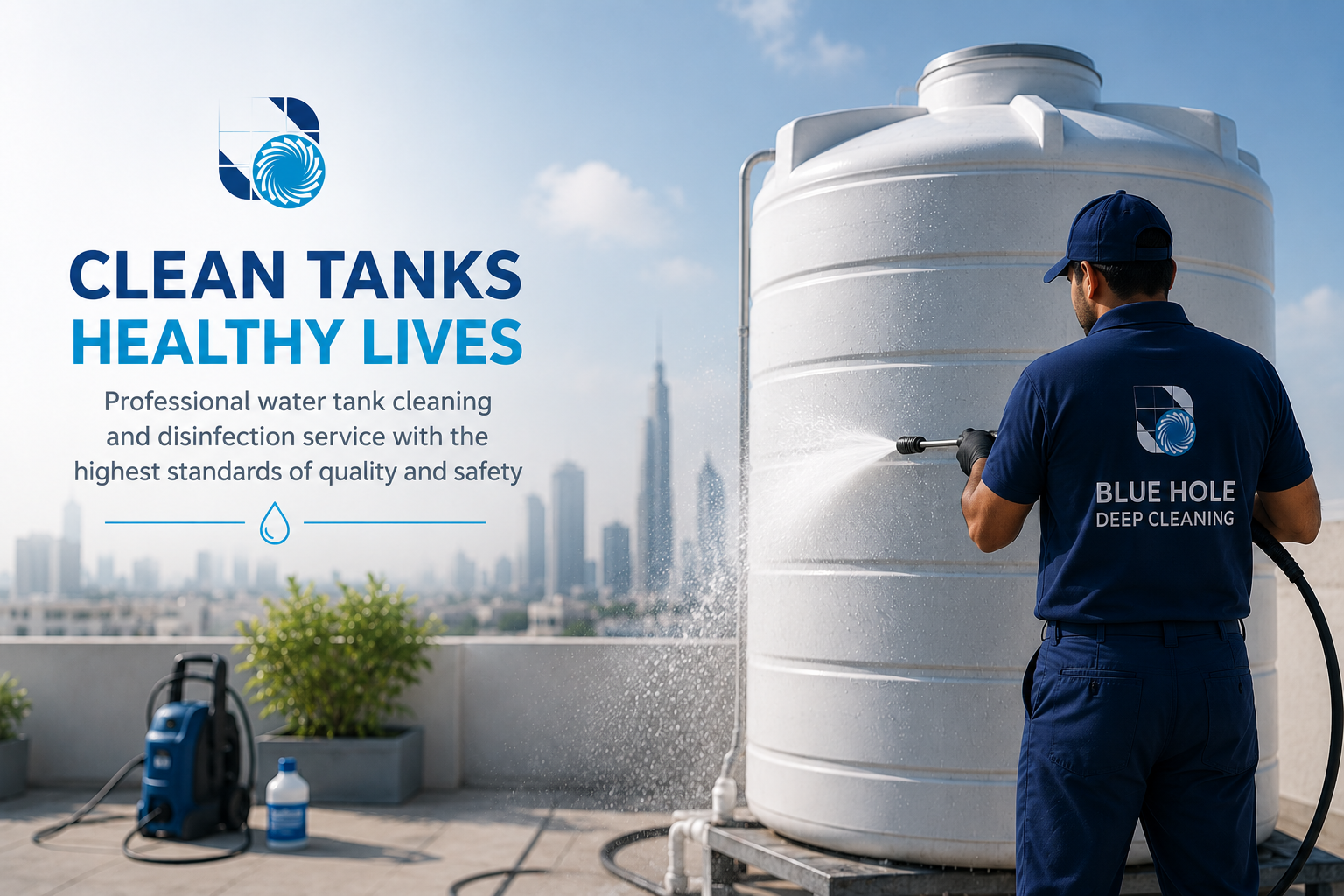
The Best Time to Clean Your Water Tank in the Eastern Province
If you are wondering about the best time to clean your water tank, or looking for a water tank cleaning company in Al Khobar or a water tank disinfection company in Dammam, you are in the right place.
Cleaning and disinfecting water tanks is one of the most important preventive maintenance tasks for maintaining water quality and protecting the health of household members. With high temperatures in Saudi Arabia, particularly in Al Khobar, Dammam, Dhahran, Qatif, Jubail, and Al Ahsa, the possibility of bacteria, algae, and sediment accumulating inside water tanks may increase, making a regular cleaning schedule especially important.
In this comprehensive guide, you will learn:
- When should you clean your water tank?
- How often should a water tank be cleaned?
- What signs indicate that a tank needs immediate cleaning?
- What are the benefits of cleaning and disinfecting water tanks?
- What is the correct professional cleaning process?
- What common mistakes should homeowners avoid?
- Blue Hole expert tips for maintaining cleaner and safer water.
Quick Answer: When Is the Best Time to Clean a Water Tank?
The recommended schedule in this guide is to clean your water tank at least twice a year:
- Before summer: March or April.
- After summer: September or October.
Additional cleaning may be required if you notice changes in the color or smell of the water, after plumbing or maintenance work, or after the property has been unoccupied for an extended period.
Why Is Water Tank Cleaning Important?
Even when the incoming water supply is clean, the tank itself can gradually accumulate contaminants.
These may include:
- Sediment
- Dust
- Algae
- Bacteria
- Fungi
- Small insects
- Rust in some metal tanks
Over time, these contaminants may affect water quality and the condition of the water system.
This is why periodic cleaning and disinfection are an important part of water tank maintenance.
What Is the Best Time to Clean a Water Tank?
The appropriate cleaning schedule depends on several factors, including the type of property, water consumption, environmental conditions, and the condition of the tank.
However, there are several particularly important times to consider.
1. Before Summer
Before summer is one of the most important times to clean and disinfect a water tank.
Temperatures rise significantly during the summer months, creating conditions that may encourage algae and bacterial growth if the tank is not properly maintained.
Cleaning before summer can help:
- Improve water quality.
- Reduce bacterial growth.
- Prevent unpleasant odors.
- Maintain water quality throughout the season.
2. After Summer
After months of increased water consumption, sediment and impurities may accumulate inside the tank.
Cleaning and disinfecting the tank after summer helps remove contaminants that may have accumulated during the season.
3. After Maintenance Work
If maintenance has been carried out on the water network, pump, or pipes, cleaning the tank after the work is completed can help remove any contaminants introduced during the maintenance process.
4. After a Long Period Away
If water has remained stagnant inside the tank for several weeks or months, cleaning and disinfecting the tank before resuming normal use is recommended in the source material.
How Often Should a Water Tank Be Cleaned?
The recommended frequency varies according to the type of property and level of water consumption.
| Property Type | Suggested Cleaning Frequency |
|---|---|
| Homes | Every 6 months |
| Villas | Every 6 months |
| Apartments | Every 6 months |
| Schools | Every 3 months |
| Restaurants | Every 3 months |
| Companies | Every 3–6 months |
| Hospitals | According to applicable health regulations |
| Hotels | Every 3 months |
Properties with higher water consumption may require more frequent maintenance.
Signs Your Water Tank May Need Immediate Cleaning
There are several warning signs that should not be ignored.
Changes in Water Color
Yellow, brown, or cloudy water may indicate sediment or other contamination inside the tank.
Unusual Smell or Taste
An unpleasant odor or unusual taste may indicate a water-quality issue that requires investigation.
Reduced Water Flow
Sediment can contribute to blockages in filters or pipes, potentially reducing water pressure.
Visible Algae
Green growth on the internal surfaces of the tank is a clear sign that cleaning and inspection are required.
Unexplained Water-Quality Concerns
If you notice recurring issues associated with water use, the tank and water system should be inspected to identify the possible cause.
How Is a Water Tank Professionally Cleaned and Disinfected?
Professional water tank cleaning involves more than simply draining the tank and rinsing it with water.
At Blue Hole Deep Cleaning, the process described in the source follows a structured sequence designed to remove accumulated contaminants and disinfect the tank.
Step 1: Inspect the Tank
Before cleaning begins, the tank is inspected for:
- Cracks or leaks.
- Condition of the tank cover.
- Condition of pipes.
- Sediment levels.
- Signs of algae or contamination.
- Insects or foreign material.
The inspection helps determine the appropriate cleaning and disinfection method.
Step 2: Drain the Water
The tank is emptied safely and the pump is disconnected when necessary so that the internal surfaces can be accessed for cleaning.
Step 3: Remove Sediment and Dirt
Specialized tools are used to remove accumulated:
- Sediment.
- Silt.
- Dust.
- Algae.
- Dirt and other deposits.
The objective is to remove contamination without damaging the tank.
Step 4: Clean the Walls and Floor
The tank’s internal surfaces are thoroughly cleaned, including:
- Walls.
- Floor.
- Corners.
- Drainage points.
- Internal water lines where applicable.
Step 5: Disinfect the Tank
Approved disinfecting products are applied according to the appropriate procedures and recommended concentrations.
This stage is intended to reduce microorganisms and contamination remaining after physical cleaning.
Step 6: Final Rinse
After disinfection, the tank is thoroughly rinsed to remove cleaning-product residue.
Step 7: Refill the Tank
Finally, the tank is refilled with clean water after the cleaning and disinfection process has been completed.
Benefits of Regular Water Tank Cleaning and Disinfection
Regular maintenance can provide several benefits.
Improved Water Quality
Removing sediment and contaminants can help maintain better water quality, including its appearance, smell, and taste.
Better Hygiene
Cleaning and disinfection help reduce accumulated microorganisms and contaminants inside the tank.
Longer Tank Life
Regular removal of sediment, algae, and buildup may help reduce deterioration of tank components over time.
Protection for Pumps and Pipes
Reducing sediment inside the tank can help limit the amount of debris reaching pumps, filters, and water lines.
Lower Maintenance Costs
Preventive maintenance may help identify problems early and reduce the risk of more expensive repairs later.
Common Water Tank Cleaning Mistakes
Several common mistakes can reduce the effectiveness of water tank maintenance.
Waiting Until There Is a Problem
Some homeowners wait until the water changes color or develops an unusual smell. A scheduled preventive cleaning program is generally more effective than waiting for visible signs of contamination.
Using Unsuitable Cleaning Products
Products not intended for water tank cleaning may leave unwanted residues or affect water quality.
Ignoring the Tank Cover
The tank itself may be clean while a damaged or poorly maintained cover allows dust, insects, and other contaminants to enter.
Cleaning Without Proper Disinfection
Physical cleaning removes dirt and sediment, while proper disinfection addresses microorganisms that may remain on internal surfaces.
Relying Only on Basic Manual Cleaning
Large tanks or tanks with substantial sediment buildup may require professional equipment for more thorough cleaning.
Blue Hole Expert Tips for Keeping Your Water Tank Clean
To help maintain water quality for longer:
- Clean the tank at least twice a year according to the schedule recommended in this guide.
- Inspect the tank cover regularly.
- Keep the tank properly sealed to reduce the entry of dust and insects.
- Avoid using unapproved cleaning chemicals.
- Monitor water color, smell, and taste.
- Request an inspection if you notice unusual changes.
- Keep a record of the most recent cleaning and disinfection date.
Why Choose Blue Hole for Water Tank Cleaning?
Blue Hole Deep Cleaning provides professional water tank cleaning and disinfection services for residential and commercial properties.
Our services include:
- Cleaning ground-level and rooftop water tanks.
- Removing accumulated sediment and algae.
- Tank disinfection.
- Professional cleaning equipment.
- Trained technicians.
- Safety-focused procedures.
- Services for homes, villas, companies, and industrial facilities.
- Coverage across the Eastern Province.
Water Tank Cleaning for Homes, Villas, and Businesses
Blue Hole provides water tank cleaning solutions for a wide range of properties, including:
- Homes.
- Villas.
- Residential properties.
- Companies and offices.
- Commercial complexes.
- Schools.
- Healthcare facilities.
- Restaurants and hospitality facilities.
The cleaning schedule and process can be adapted according to tank size, property type, usage level, and the condition of the water system.
Water Tank Cleaning Services in Al Khobar and Dammam
Our water tank cleaning and disinfection services cover Al Khobar, Dammam, Dhahran, Qatif, Jubail, Al Ahsa, Ras Tanura, Abqaiq, Khafji, Nairyah, Safwa, Saihat, and other areas across the Eastern Province.
Frequently Asked Questions
How often should a water tank be cleaned?
The guide recommends cleaning residential water tanks at least once every six months. Commercial facilities and properties with higher water consumption may require more frequent cleaning.
What is the best time to clean a water tank?
The recommended times are before summer and again after summer.
Does a water tank need cleaning even if the water looks clean?
Yes. Sediment and microorganisms may accumulate inside the tank without immediately causing obvious changes in the water’s appearance or smell.
Does water tank cleaning improve water quality?
Removing sediment, algae, and other contaminants can help improve the condition, smell, and taste of stored water.
Does Blue Hole use approved disinfecting products?
According to the company’s source content, Blue Hole uses approved cleaning and disinfecting products and follows the relevant usage instructions.
Do you clean both ground and rooftop water tanks?
Yes. Blue Hole provides cleaning and disinfection for both ground-level and rooftop tanks in different sizes and types.
Does the tank need to be completely drained?
According to the service process described in the source, the tank is completely drained before cleaning and disinfection.
How long does water tank cleaning take?
The source states that cleaning typically takes between one and two hours, depending on tank size and the required work.
Do you provide water tank cleaning for villas and businesses?
Yes. Services are available for homes, villas, residential properties, businesses, offices, commercial complexes, schools, and healthcare facilities.
Do you offer periodic water tank cleaning programs?
Yes. Blue Hole offers periodic cleaning programs for residential and commercial properties.
Conclusion
Cleaning and disinfecting your water tank is an important part of maintaining water quality and the condition of your property’s water system. Periodic maintenance helps remove sediment and contaminants, protect pumps and pipes, and identify potential problems before they become more serious.
If you are looking for a professional water tank cleaning company in Al Khobar or water tank disinfection services in Dammam, Blue Hole Deep Cleaning provides services across the Eastern Province using professional equipment and structured cleaning and disinfection procedures.
Book Your Water Tank Cleaning and Disinfection Service
Do not wait until you notice changes in the smell, color, or condition of your water. Schedule a water tank cleaning and disinfection service with Blue Hole Deep Cleaning to keep your tank properly maintained throughout the year.